
The Complete Story of a Honey Bee
-
Veda Stem- Admin
- Posted on
- 0 comments
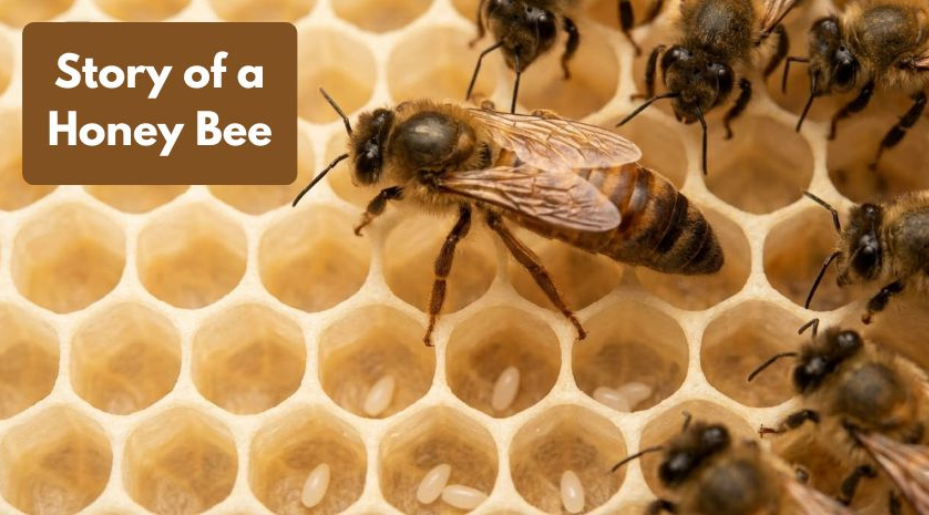
Understanding the Incredible World Inside a Beehive (Part 1)
"A single teaspoon of honey represents the lifetime work of dozens of honey bees."
This simple fact reminds us that every drop of honey is the result of remarkable teamwork, precision, and dedication. Behind every jar of pure honey lies an extraordinary story—one that begins not in a factory, but in a thriving bee colony where thousands of tiny insects work together with astonishing efficiency.
Honey bees are among the most organized creatures on Earth. Their colonies function like highly coordinated societies, where every bee has a specific role and every action contributes to the survival of the hive. From raising young bees to building honeycombs, collecting nectar, defending the colony, and producing honey, every task is carefully divided among colony members.
“Understanding how a honey bee colony works not only helps us appreciate the value of pure honey but also reveals why bees are essential for biodiversity, agriculture, and life on our planet.”
A honey bee is a social insect belonging to the genus Apis, famous for producing honey and beeswax. Unlike many insects that live independently, honey bees survive as a colony. A healthy colony can contain 20,000 to 80,000 bees, depending on the season, food availability, and environmental conditions.
Honey bees have evolved over millions of years, developing sophisticated communication systems, cooperative behaviors, and remarkable navigation abilities. They are among the few insects capable of storing food for future use, allowing the colony to survive harsh winters when flowers are scarce.
Not all honey bees are the same. Scientists have identified several species within the Apis genus, each adapted to different climates and habitats.
1. Apis mellifera (Western Honey Bee)
The Western Honey Bee is the most widely managed species worldwide. It is commonly used in commercial beekeeping because of its adaptability, gentle temperament, and high honey production. Most honey sold globally comes from this species.
2. Apis cerana (Asian Honey Bee)
Native to South and Southeast Asia, Apis cerana is smaller than the Western Honey Bee and has evolved natural defenses against several pests. It thrives in tropical and subtropical climates and plays an important role in local ecosystems.
3. Apis dorsata (Giant Honey Bee)
Known for building large, open-air combs on cliffs and tall trees, the Giant Honey Bee is one of the largest honey bee species. These bees are excellent foragers but are difficult to manage in conventional beekeeping because they do not live in enclosed hives.
4. Apis florea (Dwarf Honey Bee)
This small species constructs a single comb on tree branches or shrubs. Although it produces only small quantities of honey, it is an efficient pollinator in many parts of Asia.
Each species contributes to pollination and ecosystem health, but the Western Honey Bee remains the most commonly managed for sustainable honey production.
The Bee Colony: Nature's Perfect Society
A honey bee colony is often compared to a living superorganism. Instead of acting as separate individuals, thousands of bees work together as one coordinated unit.
Each colony is divided into three types of bees, each with unique responsibilities:
- Queen Bee
- Worker Bees
- Drone Bees
Although they share the same hive, their roles, anatomy, lifespan, and responsibilities differ significantly.
The Queen Bee: The Heart of the Colony
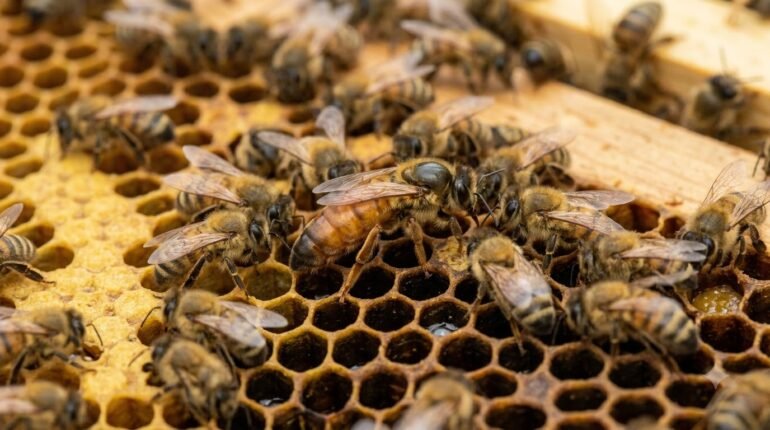
The queen bee is the only fully fertile female in a healthy colony. Her primary responsibility is reproduction and maintaining social harmony within the hive.
A healthy queen can lay 1,500–2,000 eggs per day during peak seasons. Over her lifetime, she may lay more than one million eggs.
Interestingly, the queen does not rule the colony through commands. Instead, she produces queen pheromones, chemical signals that help regulate colony behavior. These pheromones influence worker activities, suppress the development of additional queens, and help maintain the colony’s organization.
Despite her importance, the queen never collects nectar, builds combs, or produces honey. She depends entirely on worker bees for food, grooming, and protection.
Lifespan of the Queen Bee
The queen is the longest-living member of the colony, typically surviving 2 to 5 years, although beekeepers often replace queens earlier to maintain colony productivity.
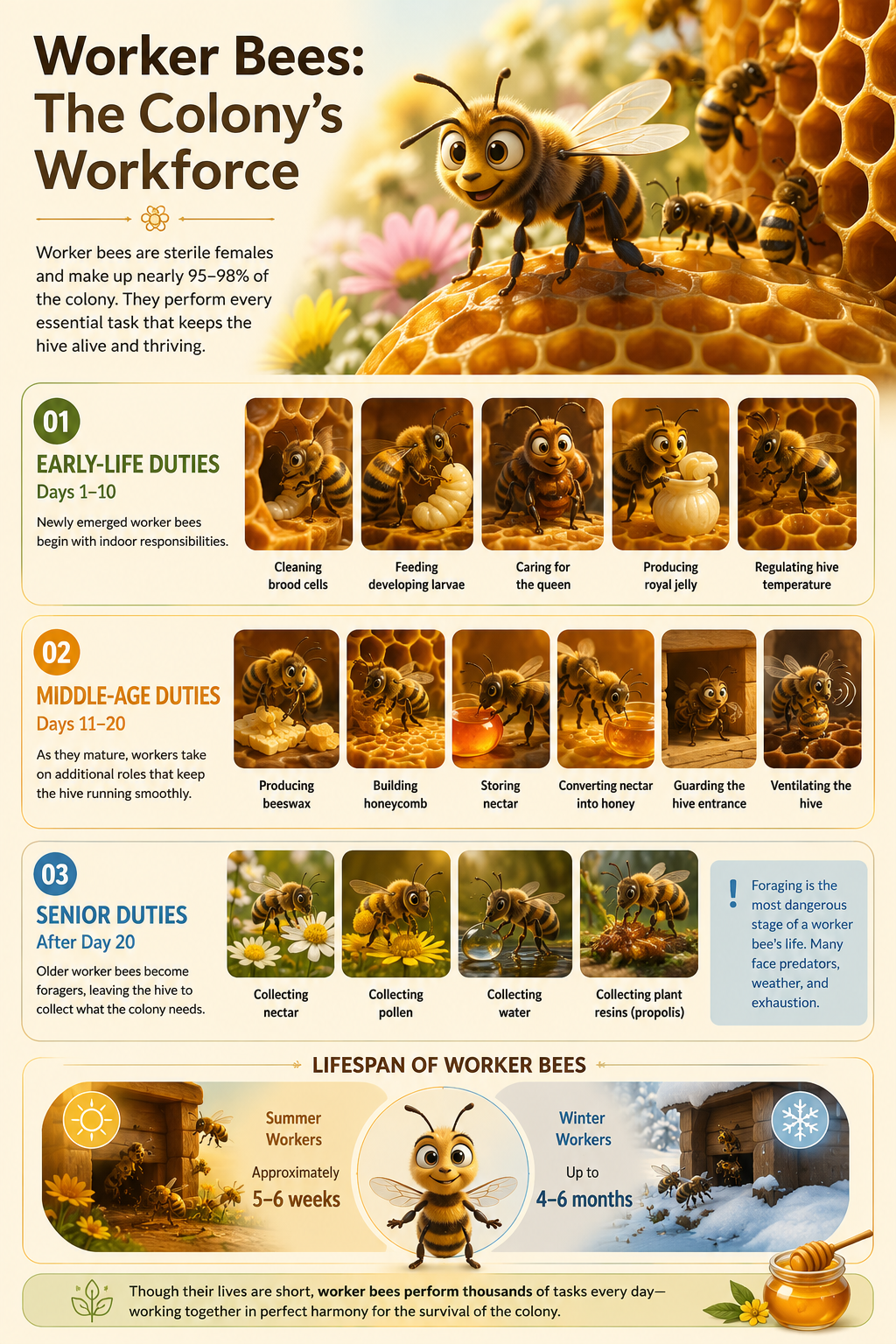
Senior Duties (After Day 20)
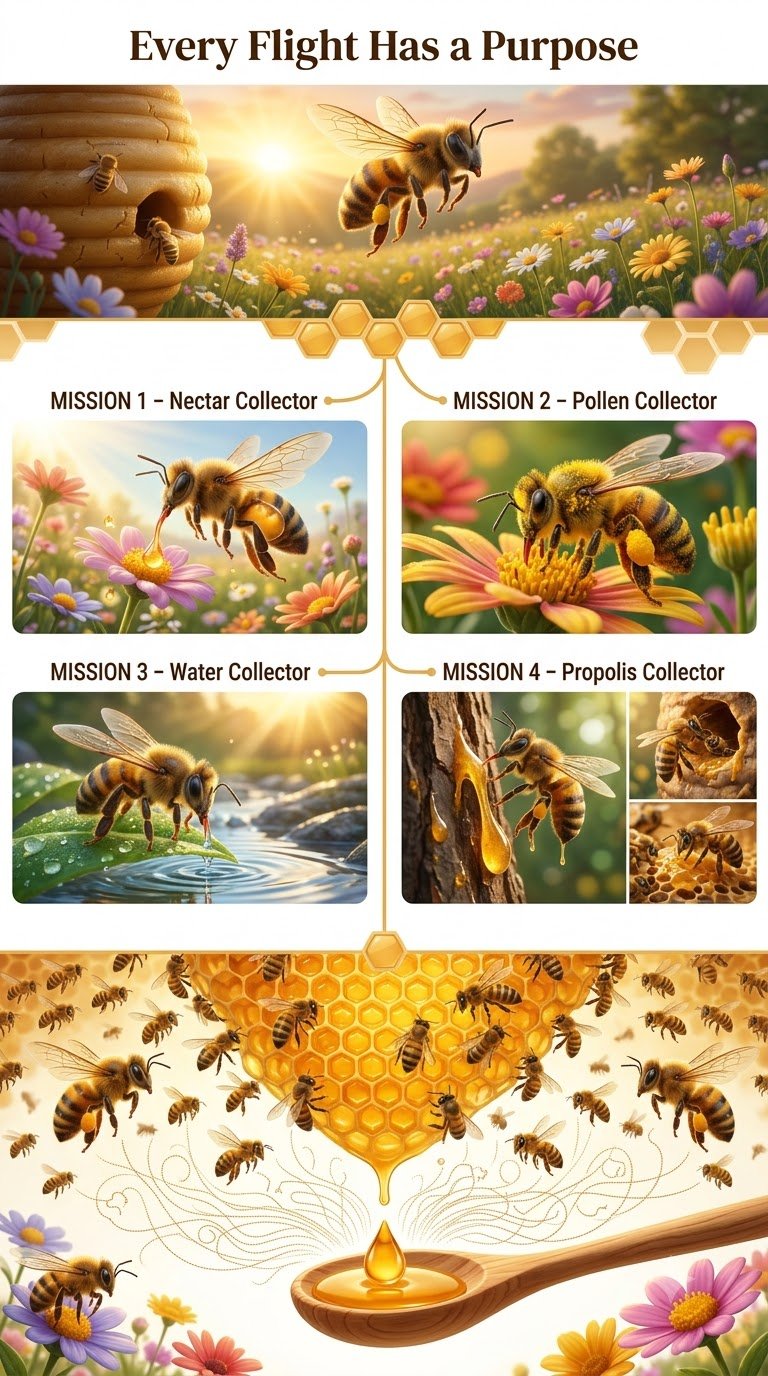
Older worker bees become foragers. They leave the hive to collect:
- Nectar
- Pollen
- Water
- Plant resins used to make propolis
Foraging is the most dangerous stage of a worker bee’s life. Exposure to predators, weather, and exhaustion means many foragers never return to the hive.
Lifespan of Worker Bees
A worker bee’s lifespan depends on the season.
- Summer workers: approximately 5–6 weeks
- Winter workers: up to 4–6 months, helping the colony survive colder periods
Although their lives are relatively short, each worker contributes to the success of the colony through thousands of coordinated tasks.
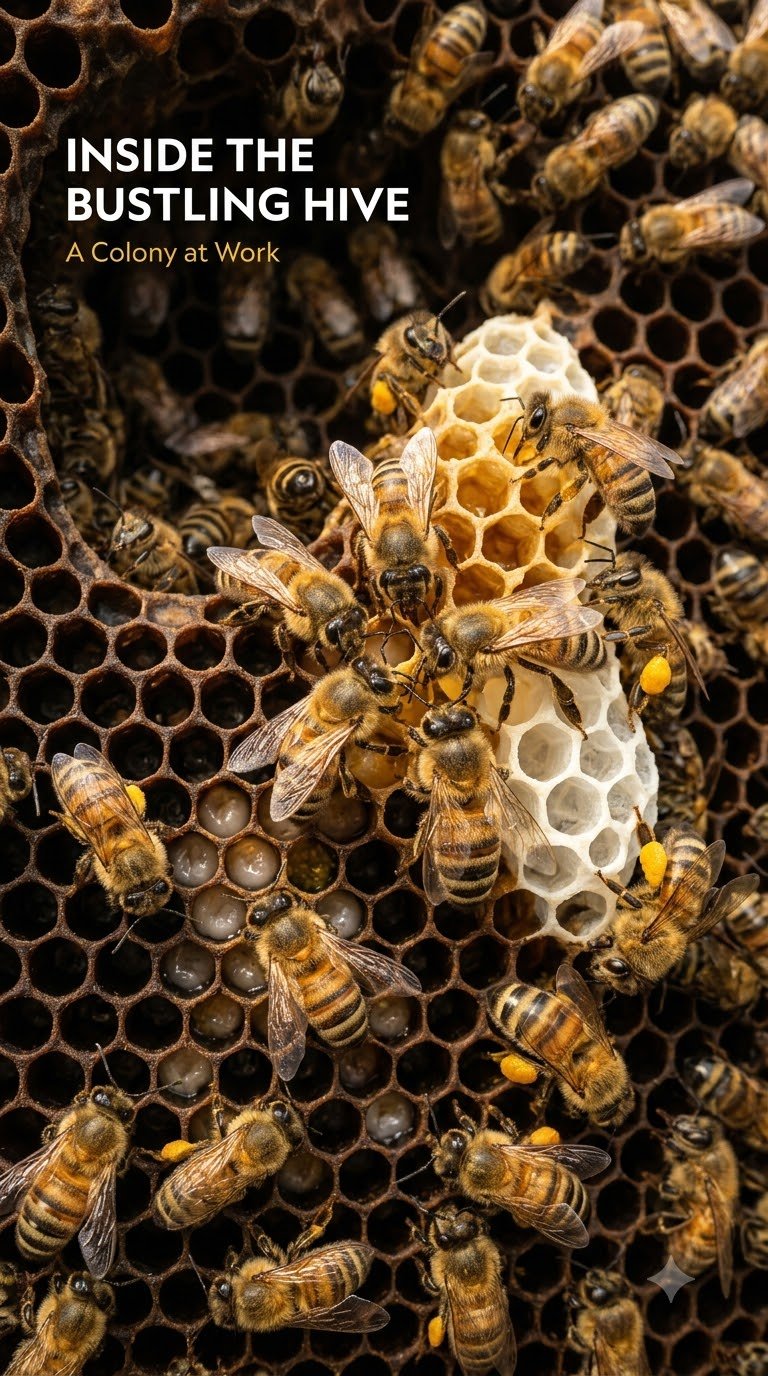
Worker Bees: The Colony’s Workforce
Worker bees are the backbone of the hive. They are sterile female bees and make up nearly 95–98% of the colony’s population.
Unlike the queen, worker bees perform almost every task necessary for the colony’s survival. What’s fascinating is that a worker bee’s job changes as she ages—a phenomenon known as age-related division of labor.
Early-Life Duties (Days 1–10)
Newly emerged worker bees begin with indoor responsibilities, including:
- Cleaning brood cells
- Feeding developing larvae
- Caring for the queen
- Producing royal jelly
- Regulating hive temperature
Middle-Age Duties (Days 11–20)
As they mature, workers take on additional roles:
- Producing beeswax
- Building honeycomb
- Storing nectar
- Converting nectar into honey
- Guarding the hive entrance
- Ventilating the hive by fanning their wings
The Geological Story Behind Himalayan Shilajit
The Himalayas are among the youngest mountain ranges on Earth, formed when the Indian tectonic plate collided with the Eurasian plate approximately **50 million years ago**. This immense geological event created dramatic elevations, mineral-rich rock formations, and diverse alpine ecosystems.
At elevations often exceeding **3,000–5,000 meters**, the environment is characterized by:
* Low oxygen levels
* Intense ultraviolet radiation
* Large temperature fluctuations
* Snow cover for much of the year
* Rich mineral deposits
* Diverse alpine plant life
These unique environmental conditions contribute to the long natural process through which Shilajit develops.
Drone Bees: The Future of the Colony
Nature's Slow Transformation
Drone bees are male bees, and their primary biological purpose is to mate with a virgin queen from another colony.
Unlike worker bees, drones:
- Do not collect nectar
- Do not produce honey
- Do not build honeycombs
- Do not defend the hive
Because they lack stingers, drones are unable to sting.
During the reproductive season, drones gather in special aerial locations called drone congregation areas, where virgin queens fly to mate. A successful mating ensures genetic diversity among bee populations.
As winter approaches and food becomes scarce, worker bees typically expel drones from the hive because they consume resources without contributing to winter survival.
Why Every Bee Matters
Although the queen often receives the most attention, a colony cannot survive without its workers, and genetic diversity depends on drones. Each type of bee performs a role that contributes to the hive’s success.
This remarkable division of labor is one of nature’s finest examples of cooperation. Every bee, regardless of its lifespan or role, contributes to the health and future of the colony.
Inside the Amazing World of the Beehive (Part 2)
In the first part of this journey, we explored the fascinating structure of a honey bee colony and discovered how the queen bee, worker bees, and drone bees each play a unique role in the survival of the hive. But one question remains:
How do thousands of tiny bees work together so efficiently without a leader giving instructions?
The answer lies in one of nature’s most sophisticated communication systems. Every honey bee follows an instinctive biological program that has evolved over millions of years. From the moment a bee is born until the end of its life, every action contributes to the survival of the colony.
The Life Cycle of a Honey Bee
Every honey bee begins its life as a tiny egg laid by the queen bee inside a perfectly shaped hexagonal wax cell.
Although every bee starts from a similar egg, nutrition and genetics determine whether it will become a queen, a worker, or a drone.
Honey bees undergo complete metamorphosis, which consists of four stages:
- Egg
- Larva
- Pupa
- Adult Bee
This transformation is one of the most remarkable biological processes in the insect world.
Stage 1: The Egg
The queen carefully inspects each honeycomb cell before laying a single egg.
She can even determine whether the egg will develop into:
- A worker bee
- A drone bee
- A future queen
Each egg is tiny—about the size of a grain of rice—and remains upright inside the cell for approximately three days.
During this stage, the embryo begins developing all the organs needed for life.
Stage 2: The Larva
After three days, the egg hatches into a tiny white larva.
At this point, the larva has no eyes, wings, or legs. Its only purpose is to eat and grow rapidly.
Worker bees known as nurse bees feed the larvae continuously.
For the first few days, every larva receives Royal Jelly, a nutrient-rich secretion produced by young worker bees.
Later:
- Worker larvae switch to a diet of bee bread (a mixture of pollen and honey).
- Drone larvae receive similar nourishment.
- Future queen larvae continue receiving only Royal Jelly throughout development.
This exclusive diet activates different genes, allowing the queen to grow larger, become fertile, and live much longer than other bees.
Stage 3: The Pupa
Once the larva reaches full size, worker bees seal the wax cell with a porous wax cap.
Inside this sealed chamber, an extraordinary transformation begins.
The larval body slowly reorganizes.
Tiny wings develop.
Compound eyes form.
Six legs appear.
Internal organs mature.
This stage is similar to a butterfly developing inside a chrysalis.
When development is complete, the young bee chews through the wax cap and emerges into the hive as an adult.
Stage 4: Adult Bee
Although fully developed, a newly emerged worker bee is not immediately ready to fly.
Its body is soft.
Its wings need time to strengthen.
It spends the first days learning basic hive duties before eventually becoming one of the colony’s experienced foragers.
This gradual progression ensures that every bee gains experience before taking on more demanding responsibilities.
The Honey Bee's Incredible Sense of Direction
How Bees Choose Flowers
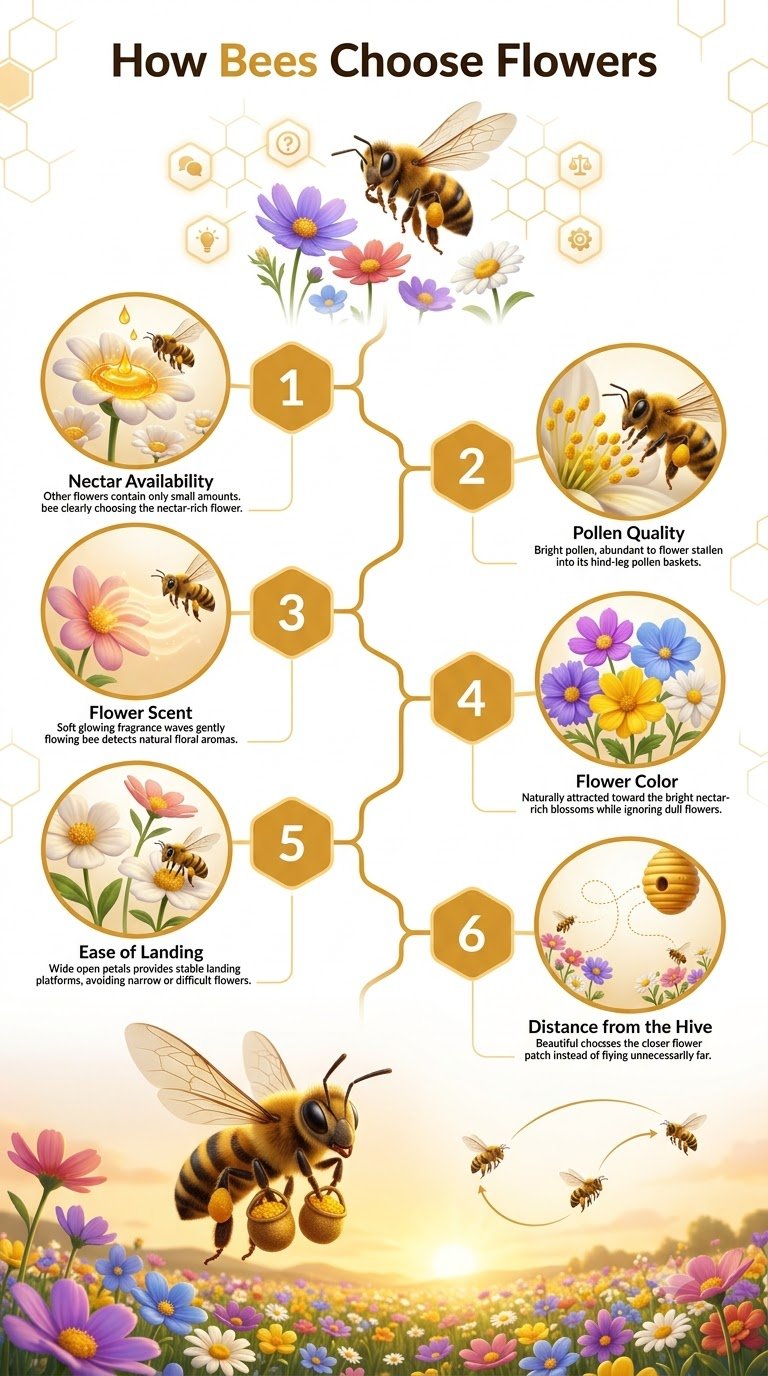
Honey bees do not visit flowers randomly.
They are surprisingly selective.
A foraging bee evaluates flowers based on several factors:
- Nectar availability
- Pollen quality
- Flower scent
- Flower color
- Ease of landing
- Distance from the hive
Bees can even remember which flower species provide the richest nectar and often return to those plants repeatedly until the nectar source declines.
This behavior is known as flower constancy, and it plays a vital role in efficient pollination.
One of the greatest mysteries of honey bees is their extraordinary navigation ability.
A foraging bee may travel several kilometers from the hive while visiting hundreds of flowers.
Yet it almost always finds its way home.
Scientists believe bees use several natural navigation tools simultaneously:
- The position of the sun
- Patterns of polarized sunlight
- Visual landmarks
- Earth’s magnetic field
- Memory of previous flights
- Their highly developed sense of smell
Together, these systems create one of nature’s most advanced biological GPS networks.
The Waggle Dance: Nature’s Language
Imagine discovering a field full of blooming flowers several kilometers away.
How would you tell thousands of nestmates exactly where it is?
Honey bees have evolved an elegant solution known as the Waggle Dance.
After returning to the hive with nectar, the forager performs a figure-eight movement across the honeycomb.
During the central “waggle run,” the bee vibrates its body.
This dance communicates three essential pieces of information:
Direction
The angle of the dance relative to gravity represents the direction of the flowers relative to the position of the sun.
Distance
The duration of the waggle run indicates how far the food source is from the hive.
Quality
The enthusiasm and speed of the dance help communicate how rewarding the flower source is.
Other worker bees observe this dance carefully before flying directly toward the newly discovered flowers.
This remarkable communication system allows thousands of bees to coordinate their efforts without maps, spoken language, or central leadership.
How Bees Turn Flower Nectar into Pure Honey (Part 3)
Imagine tasting a spoonful of pure honey. Its rich golden color, natural sweetness, and floral aroma may seem simple, but behind that single spoon lies one of nature’s most extraordinary manufacturing processes.
Unlike humans, bees don’t cook honey or mix it with other ingredients. Instead, they rely on biology, teamwork, chemistry, and engineering to transform watery flower nectar into a naturally preserved food that can last for years.
Step 1: Finding the Perfect Flower
A honey bee begins her journey early in the morning when flowers start producing nectar.
Not every flower produces the same amount of nectar. Bees instinctively choose flowers that offer the highest reward while also remembering which locations produced abundant nectar during previous visits.
Depending on the season and surrounding vegetation, a bee may collect nectar from:
- Mustard flowers
- Litchi blossoms
- Eucalyptus trees
- Jamun flowers
- Acacia trees
- Wild forest flowers
- Sunflower fields
- Clover
- Fruit orchards
This floral diversity gives every honey its unique color, aroma, flavor, and nutritional profile.
Step 2: Drinking Nectar
Using its long tongue, known as the proboscis, the bee draws nectar from deep inside the flower.
Fresh nectar is surprisingly different from honey.
Typically, flower nectar contains:
- Around 70–80% water
- Natural sugars such as sucrose, glucose, and fructose
- Small amounts of amino acids
- Organic acids
- Plant compounds
- Aromatic molecules
At this stage, nectar is too watery to store for long periods because microorganisms could easily grow in it.
The bee stores the nectar in a special organ called the honey stomach, which acts as a transport container rather than a digestive organ.
Step 3: Nature’s First Chemical Transformation
While the nectar is inside the honey stomach, something remarkable begins to happen.
Special glands inside the bee produce natural enzymes that mix with the nectar during transport.
Some of the most important enzymes include:
Invertase
This enzyme converts sucrose into simpler sugars—glucose and fructose—which give honey its characteristic sweetness.
Glucose Oxidase
This enzyme helps produce small amounts of hydrogen peroxide and gluconic acid, contributing to honey’s naturally low pH and helping preserve it.
Diastase (Amylase)
Although present in smaller quantities, this enzyme helps break down certain complex carbohydrates.
These natural enzymatic reactions begin transforming simple flower nectar into what will eventually become honey.
The Honey Bee's Incredible Sense of Direction
Why Doesn’t Honey Spoil Easily?
Honey is one of the few natural foods that can remain stable for an exceptionally long time when stored properly.
Several natural factors contribute to this remarkable shelf life:
- Low moisture content limits microbial growth.
- Naturally acidic pH creates an unfavorable environment for many microorganisms.
- High sugar concentration reduces available water for bacteria and yeasts.
- Bee-derived enzymes contribute to honey’s unique preservation properties.
Because of these natural characteristics, properly stored honey can remain wholesome for years.
Crystallization may occur over time, but this is a natural process and does not necessarily indicate poor quality.
Ripening the Honey
Even after most of the water has evaporated, the honey continues to mature inside the comb.
During this stage:
- Enzymes continue their work.
- Organic acids develop.
- Floral aromas become more concentrated.
- The texture thickens.
- Natural sugars reach a stable balance.
Only when the honey reaches the proper consistency do the bees consider it ready for long-term storage.
Step 8: Sealing the Honey
Once the honey is fully ripened, worker bees cover each filled honeycomb cell with a thin layer of fresh beeswax.
This protective wax seal is called a capping.
Wax capping serves several important purposes:
- Protects honey from moisture in the air.
- Prevents contamination.
- Preserves aroma and flavor.
- Allows the colony to store food safely for months, especially during winter or periods of limited flowering.
When beekeepers harvest mature honey, they first remove these wax cappings before extracting the honey from the comb.
Why Honey Bees Are Nature's Greatest Pollinators (Part 4)
By now, we’ve followed the incredible journey of a honey bee—from its birth inside a honeycomb to its role in collecting nectar and transforming it into pure honey. But the story of honey bees extends far beyond honey production.
In fact, the greatest contribution of honey bees is not honey—it is pollination.
Every flight a honey bee takes helps plants reproduce, supports biodiversity, and contributes to the production of fruits, vegetables, nuts, and seeds that nourish people and wildlife across the globe.
By now, we’ve followed the incredible journey of a honey bee—from its birth inside a honeycomb to its role in collecting nectar and transforming it into pure honey. But the story of honey bees extends far beyond honey production.
In fact, the greatest contribution of honey bees is not honey—it is pollination.
Every flight a honey bee takes helps plants reproduce, supports biodiversity, and contributes to the production of fruits, vegetables, nuts, and seeds that nourish people and wildlife across the globe.
Why Bees Matter to Agriculture
Many crops depend on insect pollination to produce healthy harvests.
Honey bees help pollinate crops such as:
- Apples
- Almonds
- Mustard
- Sunflowers
- Cucumbers
- Watermelons
- Litchi
- Jamun
- Berries
- Pumpkin
- Coffee
Healthy bee populations contribute to better fruit development, improved seed production, and greater biodiversity.
While not every crop depends entirely on honey bees, they play a significant role in supporting agricultural productivity around the world.
Pollination: The Hidden Gift of Honey Bees
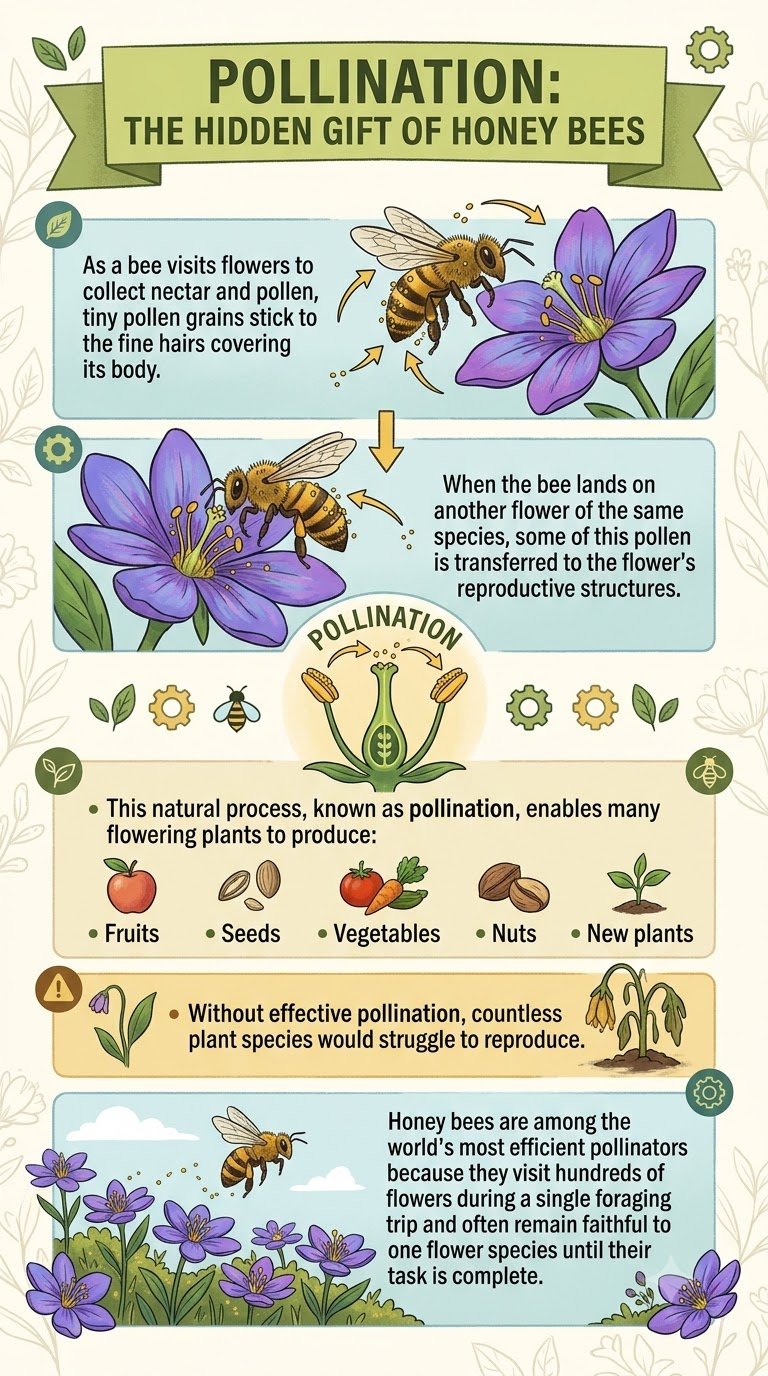
As a bee visits flowers to collect nectar and pollen, tiny pollen grains stick to the fine hairs covering its body.
When the bee lands on another flower of the same species, some of this pollen is transferred to the flower’s reproductive structures.
This natural process, known as pollination, enables many flowering plants to produce:
- Fruits
- Seeds
- Vegetables
- Nuts
- New plants
Without effective pollination, countless plant species would struggle to reproduce.
Honey bees are among the world’s most efficient pollinators because they visit hundreds of flowers during a single foraging trip and often remain faithful to one flower species until their task is complete.
Seasonal Life Inside the Hive
The rhythm of a honey bee colony changes with the seasons.
Spring
The queen increases egg laying as flowers begin to bloom. Worker bees expand the colony and collect fresh nectar and pollen.
Summer
This is the busiest season. Nectar flow is at its peak, honey production increases, and the colony reaches its largest population.
Autumn
As flowering plants become less abundant, bees reduce brood rearing and begin preparing food stores for winter.
Winter
The colony remains inside the hive, clustering tightly around the queen to generate warmth. Instead of foraging, bees survive by consuming the honey they carefully stored during the warmer months.
This seasonal cycle highlights why bees make honey—not for humans, but as their essential food reserve.
Sustainable Beekeeping: Working With Nature
Ethical beekeeping focuses on supporting the health and well-being of honey bee colonies while harvesting honey responsibly.
Responsible beekeepers:
- Monitor hive health regularly.
- Protect bees from pests and diseases.
- Ensure colonies have enough honey to survive seasonal changes.
- Avoid unnecessary stress during inspections.
- Harvest only mature, capped honey.
- Preserve clean and natural hive conditions.
Sustainable beekeeping helps maintain healthy bee populations while allowing people to enjoy high-quality honey.
-
All bees make honey.
Only a small number of bee species produce surplus honey. Most of the world's bee species are solitary and do not build honey-producing colonies.
-
Honey bees attack without reason.
Honey bees are generally focused on foraging and protecting their colony. They typically sting only when they perceive a serious threat.
-
Crystallized honey has gone bad.
Crystallization is a natural process influenced by the honey's glucose content and storage temperature. Properly stored crystallized honey remains safe to eat.